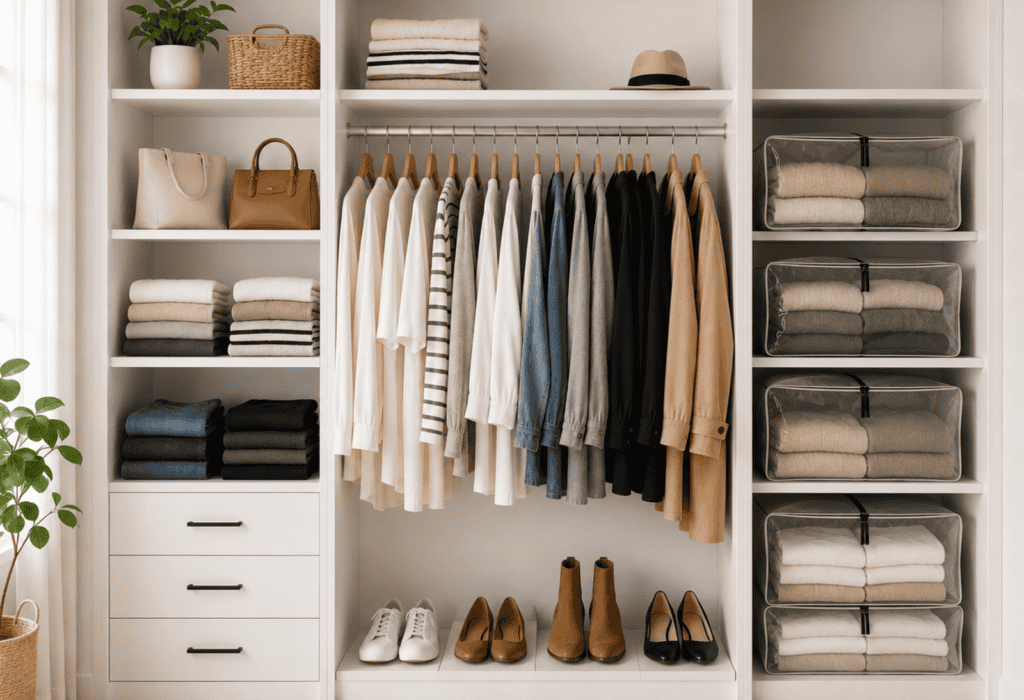
Have you ever opened your closet, looked at all your clothes, and still felt like you had nothing to wear?
It happens to many of us. A wardrobe can be full of shirts, jeans, jackets, and other clothing, yet getting dressed in the morning can still feel difficult. Too many choices often create more confusion rather than making life easier.
This is where a minimalist wardrobe can help.
A minimalist wardrobe is all about owning clothes that you actually wear, enjoy, and need. Instead of buying more and more items, you focus on keeping a smaller collection of versatile pieces that work well together.
The goal is not to own as few clothes as possible. Minimalism looks different for everyone. The idea is simply to remove unnecessary clutter and create a wardrobe that suits your lifestyle.
If you are just getting started, this beginner-friendly guide will walk you through everything you need to know.
What Is a Minimalist Wardrobe?
A minimalist wardrobe is a carefully selected collection of clothing that makes getting dressed easier.
The clothes in your wardrobe should ideally fit well, feel comfortable, and work with other items you own. Rather than having dozens of clothes that rarely get worn, you focus on pieces that you can use regularly.
A minimalist wardrobe often includes:
- Basic everyday tops
- Comfortable jeans
- Versatile trousers
- Shirts or blouses
- Sweaters and jackets
- Seasonal clothing
- Practical shoes
There is no official number of items you need to own.
Some people are happy with 30 pieces, while others may need 50 or more. Someone who works in an office, for example, may need more clothing than someone who works from home.
The best minimalist wardrobe is not the smallest one. It is the one that works best for your everyday life.
Why Should You Create a Minimalist Wardrobe?
A simpler wardrobe can make everyday life much easier.
When most of your clothes fit well and work together, you spend less time standing in front of your closet trying to decide what to wear.
A minimalist wardrobe can also help you become more careful about shopping. Instead of buying clothes just because they are cheap or trendy, you start thinking about whether you will actually wear them.
Some of the benefits include:
- Less clutter in your closet
- Less time spent choosing outfits
- Easier outfit combinations
- Fewer unnecessary purchases
- A better understanding of your personal style
- More focus on quality and comfort
Most importantly, a minimalist wardrobe can help you feel more organized and confident in what you wear.
Minimalist Wardrobe Checklist
Here are some useful clothing categories to consider when building your minimalist wardrobe.
1. Basic T-Shirts and Everyday Tops
Basic tops are the foundation of many wardrobes.
They are easy to wear, comfortable, and can be styled in many different ways. A simple T-shirt can be worn with jeans for a casual look or layered under a jacket for something more polished.
You may want to include a few basics such as:
- A white T-shirt
- A black or dark-colored T-shirt
- A neutral-colored top
- A long-sleeve shirt
- A comfortable everyday top
You do not need every possible color. Choose shades that you enjoy wearing and that work well with the rest of your clothes.
2. A Good Pair of Jeans
For many people, jeans are one of the most useful items in a wardrobe.
A good pair can be worn for casual outings, everyday activities, travel, and even some smart-casual occasions.
Choose a style that feels comfortable and suits your body.
Some popular options include:
- Straight-leg jeans
- Slim-fit jeans
- Relaxed-fit jeans
- Wide-leg jeans
You do not have to follow every fashion trend. The best pair of jeans is the one you feel comfortable wearing again and again.
A classic blue pair is a good starting point, and you can add another neutral color if you need more variety.
3. Versatile Trousers
Jeans are great, but having one or two pairs of trousers can make your wardrobe more flexible.
Trousers can easily be dressed up or down. You can wear them with a simple T-shirt for a relaxed look or pair them with a shirt or blazer for a more professional outfit.
Neutral colors are usually the easiest to style, including:
- Black
- Gray
- Navy
- Beige
- Brown
Choose colors that work well with the tops you already own.
4. A Simple Shirt or Blouse
A simple shirt or blouse can be surprisingly versatile.
For example, a classic button-down shirt can be worn at work, during casual outings, or for a dinner or special occasion.
Depending on your style, you might choose:
- A white button-down shirt
- A neutral-colored shirt
- A casual overshirt
- A simple blouse
You do not need several similar shirts. A few that fit well and feel comfortable are often enough.
5. Comfortable Sweaters
If you live in a place with colder weather, sweaters are an important part of your wardrobe.
Instead of buying many different styles, focus on a few sweaters that you genuinely enjoy wearing.
Neutral colors are usually easy to combine with different outfits.
You might choose:
- A black sweater
- A gray sweater
- A beige sweater
- A navy sweater
Of course, you do not need all of them. The number of sweaters you own should depend on your climate and how often you wear them.
6. A Versatile Jacket
A good jacket can make a simple outfit look completely different.
For example, a basic T-shirt and jeans can look more stylish when paired with the right jacket.
Some versatile options include:
- A denim jacket
- A lightweight jacket
- A neutral-colored coat
- A leather-style jacket
Think about your lifestyle and local weather before choosing one.
If you live somewhere warm, a heavy winter coat may not be necessary. On the other hand, colder climates may require several warm layers.
Choose what you will actually use.
7. A Blazer or Smart Layer
A blazer is not essential for everyone, but it can be useful if you work in an office or enjoy a more polished look.
A simple blazer can make an outfit look more put together without much effort.
You can wear it with:
- Jeans and a T-shirt
- Trousers and a shirt
- A dress
- A skirt
Black, navy, gray, and beige are popular choices because they are easy to match.
However, do not buy a blazer simply because it appears on a minimalist wardrobe checklist. If it does not fit your lifestyle, you probably do not need it.
8. Seasonal Clothing
Your wardrobe should change depending on the season.
During warmer months, you may need:
- Lightweight T-shirts
- Shorts
- Breathable shirts
- Sandals
During colder months, you may need:
- Sweaters
- Warm jackets
- Coats
- Boots
- Scarves
You do not have to keep every seasonal item in your closet throughout the year.
Storing clothes that you are not currently using can help keep your wardrobe clean and organized.
9. Comfortable Everyday Shoes
Shoes are another important part of a minimalist wardrobe.
You do not need a large shoe collection. Instead, focus on having a few pairs that are comfortable and useful.
Depending on your lifestyle, you might need:
- Everyday sneakers
- Casual shoes
- Formal shoes
- Boots
- Sandals
Not everyone needs all of these options.
Think about your daily routine. If you walk a lot, comfortable shoes should be a priority. If you regularly attend formal events, you may need a suitable pair of dress shoes.
Your shoe collection should support your lifestyle.
10. A Simple Color Palette
Choosing a simple color palette can make getting dressed much easier.
This does not mean you can only wear black, white, and gray. You can wear any colors you like.
However, choosing colors that work well together allows you to create more outfits with fewer clothes.
Start with a few neutral colors, such as:
- Black
- White
- Gray
- Beige
- Navy
- Brown
Then add one or two colors that you love.
Maybe you enjoy blue, green, burgundy, red, or another color that suits your personal style.
The goal is not to limit yourself. It is to make sure your clothes can be mixed and matched easily.
11. Clothes That Fit You Well
One of the biggest mistakes people make is keeping clothes that do not fit properly.
You may own a beautiful shirt or an expensive pair of jeans, but if you do not feel comfortable wearing them, they will probably spend most of their time in your closet.
When choosing clothes, ask yourself:
- Does this fit me well?
- Is it comfortable?
- Do I feel confident wearing it?
- Can I see myself wearing it regularly?
Your wardrobe should work for you right now.
Try not to keep clothes simply because you hope they will fit someday. Keeping clothes that you cannot wear often creates unnecessary clutter.
12. Quality Basics
A minimalist wardrobe is not about spending a lot of money.
You do not need designer clothes or expensive brands.
However, it is helpful to pay attention to quality, especially when buying items that you plan to wear frequently.
When shopping, consider:
- Fabric quality
- Comfort
- Stitching
- Fit
- Durability
A well-made item that you wear regularly can offer better value than several cheap items that quickly wear out.
There is also no need to replace your entire wardrobe at once.
Start with what you already own and slowly replace items when necessary.
How to Start Building Your Minimalist Wardrobe
The easiest way to start is by looking at what you already have.
Take some time to go through your closet and separate your clothes into different categories.
Keep
Keep the clothes that fit well, feel comfortable, and are regularly worn.
Donate
Donate items that are still in good condition but no longer match your style or lifestyle.
Sell
If you have valuable clothing that you no longer wear, you may consider selling it.
Store
Store seasonal clothing or special-occasion items that you do not need on a regular basis.
Once you finish organizing your closet, you will have a better idea of what you actually own.
You may discover that you already have most of the essentials you need.
Before buying anything new, make a list of the items that are genuinely missing.
Then add new pieces slowly and thoughtfully.
Final Thoughts
A minimalist wardrobe is not about following strict fashion rules or counting every item you own.
It is about creating a wardrobe that makes your life easier.
Your closet should contain clothes that fit you well, suit your lifestyle, and make you feel comfortable and confident.
Start with simple basics. Keep your favorite pieces, remove clothes you no longer use, and focus on versatile items that can be worn in different ways.
There is no need to make everything perfect overnight.
Building a minimalist wardrobe takes time. Your style may change, your lifestyle may change, and your wardrobe can change with you.
The most important thing is to be intentional about what you keep and what you buy.
When you own clothes that you genuinely enjoy wearing, getting dressed becomes easier. You spend less time worrying about what to wear, reduce unnecessary shopping, and create a closet that feels organized and practical.
Start small, keep what works for you, and build a minimalist wardrobe that is simple, comfortable, stylish, and completely your ow
Leave a Reply