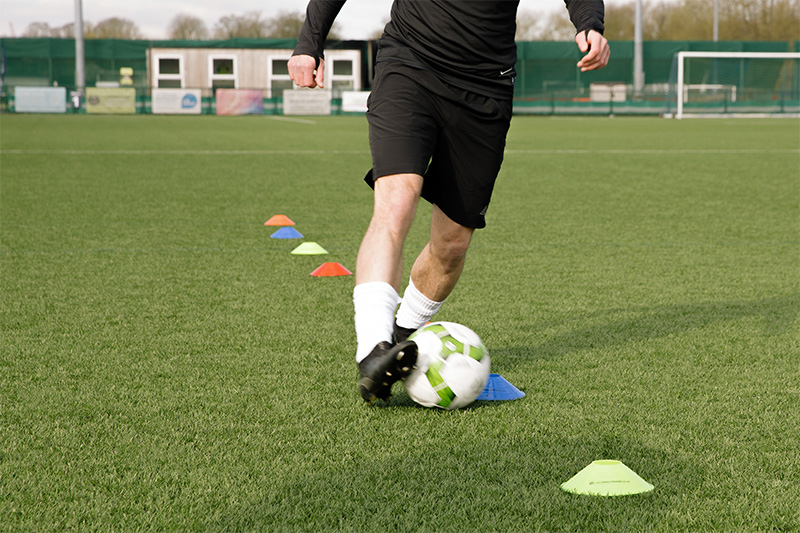
Dribbling is one of the first skills most soccer players want to learn. There is something exciting about controlling the ball at your feet, moving past a defender, and creating space for yourself or a teammate.
But good dribbling isn’t simply about running quickly with the ball. It is about control, balance, awareness, timing, and knowing what to do when an opponent is closing you down.
If you’re just starting out, don’t worry about learning complicated tricks right away. The best players often rely on simple movements performed with confidence and good timing.
This soccer dribbling guide for beginners will walk you through the basics and show you how to improve your ball control step by step.
What Is Dribbling in Soccer?
Dribbling is the skill of moving with the ball while keeping it under control.
A player may dribble to move into open space, beat an opponent, keep possession, or create an opportunity to pass or shoot.
Good dribbling involves more than keeping the ball close. You also need to know when to slow down, when to accelerate, and when passing is a better option.
The goal isn’t always to beat a defender. Sometimes the smartest dribble is simply the one that helps you move into a better position.
1. Start With Basic Ball Control
Before practicing fancy moves, become comfortable with the ball.
Spend time gently moving the ball using different parts of both feet. Try using the inside, outside, and sole of your foot.
Begin slowly. Your first goal should be control, not speed.
Try simple exercises such as:
- Moving the ball back and forth between your feet
- Dribbling slowly in a straight line
- Changing direction every few touches
- Using your weaker foot
- Keeping the ball close while walking
As your control improves, gradually increase your speed.
2. Keep the Ball Close
One of the biggest beginner mistakes is kicking the ball too far ahead.
A heavy touch may give you more running room, but it can also give a defender the chance to steal the ball.
When you’re surrounded by opponents, use shorter touches and keep the ball close enough to change direction quickly.
When you have open space, you can push the ball farther ahead and run onto it.
Learning to adjust your touch based on the situation is a major part of becoming a better dribbler.
3. Use Different Parts of Your Foot
You don’t have to dribble with just one part of your foot.
The inside of your foot is useful for controlled movements and changes of direction. The outside can help you move quickly while keeping your body between the ball and a defender.
The sole of your foot can also be useful when stopping or pulling the ball backward.
Practice using both feet and different surfaces of the foot. The more comfortable you become, the more options you’ll have during a game.
4. Keep Your Head Up
It’s easy for beginners to stare at the ball while dribbling.
You need to look down sometimes, but try to develop the habit of checking your surroundings.
Look up between touches to see where defenders, teammates, and open space are.
This is one of the most important soccer dribbling skills because good ball control isn’t very useful if you don’t know what’s happening around you.
Practice by taking a few touches while looking ahead, then briefly checking the ball again.
5. Learn to Change Speed
Speed isn’t only about how fast you can run.
A sudden change of pace can be much more effective against a defender than simply sprinting toward them.
For example, approach an opponent slowly, make a small movement to suggest one direction, and then accelerate into open space.
The change from slow to fast can force a defender to react.
Practice jogging with the ball, slowing down, and then suddenly accelerating for several meters.
6. Practice Simple Direction Changes
You don’t need ten different tricks to become a good dribbler.
Start with basic movements such as:
- Inside cut
- Outside cut
- Pullback
- Stop-and-go
- Body feint
- Simple step-over
Focus on performing each movement smoothly rather than trying to do it as quickly as possible.
Once you understand the movement, practice it from different angles and at different speeds.
7. Use Your Body to Protect the Ball
Your body can be just as important as your feet when you’re dribbling.
If a defender is approaching from your right side, place your body between the defender and the ball when possible.
Use your shoulder, hips, and position to shield the ball without pushing or committing a foul.
This is especially useful when you need to hold possession while waiting for a teammate to become available.
8. Practice With Cones
Cone drills are a simple way to improve close control and changes of direction.
Set up several cones in a line or zigzag pattern. Dribble through them using both feet.
Start slowly and concentrate on keeping the ball close. Once the movement feels comfortable, increase your speed.
You can also practice moving around a single cone repeatedly, changing direction with different parts of your foot.
Remember that cone drills are useful for technique, but real defenders behave differently. Eventually, combine your drills with game-like practice.
9. Practice Against Real Pressure
Dribbling around cones is helpful, but you also need to learn how to dribble when someone is trying to take the ball.
Ask a teammate to apply light defensive pressure.
Start with simple situations where you have plenty of space. Gradually make the area smaller or allow the defender to apply more pressure.
This teaches you to make decisions rather than simply perform a memorized move.
You will begin to understand when to turn, accelerate, shield the ball, pass, or stop.
10. Don’t Overuse Tricks
Fancy skills can be fun, but they aren’t always the best choice.
Trying complicated tricks repeatedly can actually make you easier to defend if you don’t have good control or timing.
Focus on a few reliable movements and learn when to use them.
A simple change of direction followed by acceleration can often be more effective than a complicated trick that leaves you off balance.
The best dribbling move is usually the one that solves the problem in front of you.
11. Train Your Weaker Foot
If you can only dribble comfortably with one foot, defenders can predict your next move more easily.
Spend part of every training session using your weaker foot.
It may feel awkward at first. That’s normal.
Start with simple touches and slow dribbling. As your confidence improves, use the weaker foot for direction changes, cone drills, and faster movements.
Even a few minutes of weaker-foot practice during every session can make a noticeable difference over time.
12. Know When to Pass
Good soccer isn’t about dribbling all the time.
Sometimes the best decision is to pass.
If two or three defenders are closing you down, holding onto the ball may put your team under unnecessary pressure. A quick pass can move the ball faster than you ever could by dribbling.
Use dribbling when it helps your team. Use passing when it is the smarter option.
That decision-making ability is what separates useful dribbling from simply doing tricks.
Simple Soccer Dribbling Practice Routine
If you’re a beginner, you don’t need a complicated training program.
Try this simple routine:
- 5 minutes: Easy touches with both feet
- 5 minutes: Straight-line dribbling
- 5 minutes: Cone dribbling
- 5 minutes: Direction and speed changes
- 5 minutes: Weaker-foot practice
- 10 minutes: Dribbling against a teammate or defender
Practice consistently rather than trying to improve everything in one session.
Common Dribbling Mistakes to Avoid
Keep an eye out for these common problems:
- Kicking the ball too far ahead
- Looking only at the ball
- Using only the stronger foot
- Trying tricks without understanding when to use them
- Running at the same speed all the time
- Forgetting to protect the ball with your body
- Trying to dribble when a pass is clearly better
Fixing these basic habits can improve your game faster than learning dozens of advanced skills.
Final Thoughts
Learning how to dribble in soccer takes patience and repetition. You don’t need to become a trick specialist overnight. Start with close control, learn to use both feet, keep your head up, and practice changing direction and speed.
Once those basics become comfortable, add simple moves and gradually introduce defensive pressure.
Most importantly, practice with a purpose. Don’t just move the ball around cones—think about what you would do if a real defender were standing in front of you.
Good dribbling is about control, confidence, and making the right decision at the right moment. Keep practicing, stay patient, and those skills will naturally become part of your game.
Leave a Reply