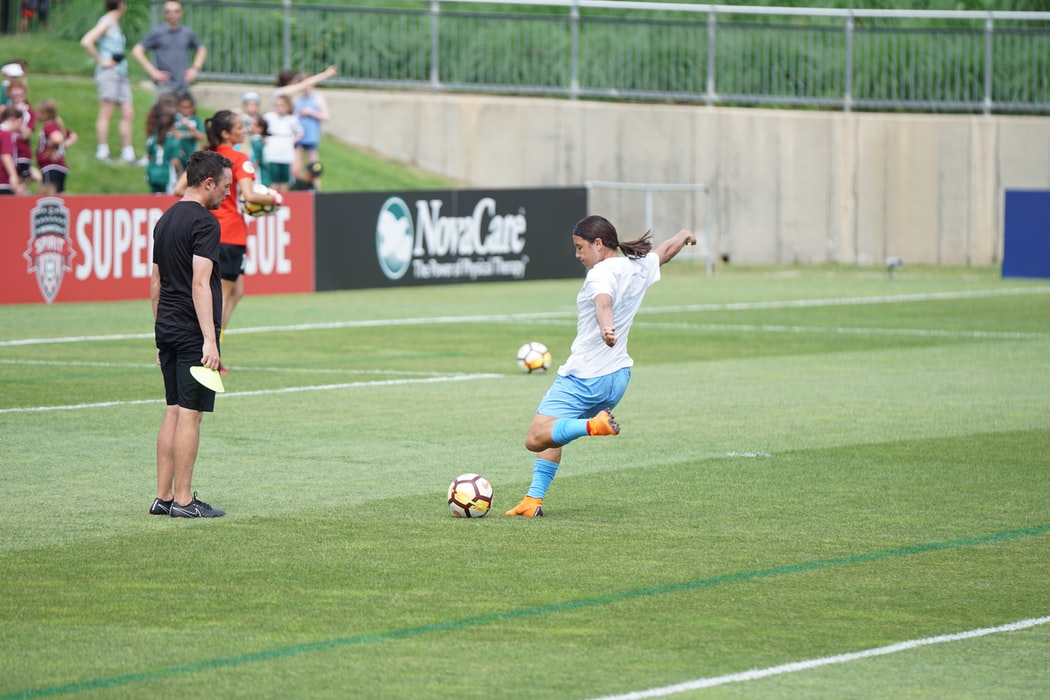
A good soccer shot can change the entire game. One well-placed finish can turn a close match into a win, while a confident strike from outside the box can catch everyone by surprise.
But improving your shooting isn’t simply about kicking harder. If you’ve ever wondered why your shots keep going wide, flying over the crossbar, or ending up straight at the goalkeeper, the answer is often found in technique rather than power.
The good news is that shooting is a skill you can improve with regular, focused practice. You don’t need expensive equipment or complicated training sessions. A ball, a goal or target, and some space are enough to get started.
Here’s how to improve soccer shooting and become more confident in front of goal.
1. Fix Your Basic Shooting Technique
Before working on advanced finishing, make sure your basic technique is solid.
Place your non-kicking foot beside the ball and point it toward your target. Keep your body balanced and avoid leaning too far backward.
For a driven shot, use the laces or instep of your foot and strike through the ball. Let your kicking leg follow naturally through the shot.
Don’t rush this movement. Practice it slowly until your body position and swing start to feel automatic.
A technically clean shot is much easier to improve than one built around poor habits.
2. Focus on Accuracy First
One of the biggest mistakes players make is focusing on power before accuracy.
A powerful shot isn’t useful if it ends up in the stands.
Start by choosing a specific target inside the goal. Instead of simply trying to score, aim for a particular area.
You could practice hitting:
- The bottom corners
- The far side of the goal
- Areas close to either post
- Open spaces around the goalkeeper
Once you can regularly hit your target, gradually increase your shooting power.
3. Practice Shooting With Both Feet
Your stronger foot will naturally feel more comfortable, but relying on it too much can limit your options.
Imagine receiving the ball on your weaker side with a defender closing in. If you need several touches just to move the ball onto your dominant foot, the opportunity may disappear.
Start by taking simple shots with your weaker foot from a short distance.
Then progress to:
- Moving shots
- First-time finishes
- Shots after dribbling
- Different shooting angles
- Finishes under light pressure
You don’t have to make your weaker foot equal to your stronger one immediately. The goal is to become comfortable enough to use it when necessary.
4. Improve Your First Touch
Shooting doesn’t start with the shot itself. It often starts with your first touch.
A poor touch can put the ball too far away, leave you facing the wrong direction, or give a defender time to close you down.
Practice receiving the ball and taking your first touch into space.
Then finish quickly.
For example, have a teammate pass the ball toward you, control it with one touch, and shoot with the next.
This teaches you to prepare the ball for the shot rather than treating ball control and shooting as two completely separate skills.
5. Learn to Control Your Power
Not every scoring opportunity requires a powerful strike.
Sometimes a calm, accurate finish is the better option.
Practice using different levels of power. Start with controlled shots and gradually increase the pace.
Think about the situation:
- Close to goal? Prioritize control and placement.
- More space available? A driven shot may work well.
- Little time? A quick first-time finish may be necessary.
- Defender approaching? Take the simplest effective option.
Being able to change your technique depending on the situation makes you a more complete finisher.
6. Work on Your Body Position
Your body position can have a major effect on where the ball goes.
If you lean backward too much, the ball is more likely to rise. If you lose your balance while striking, accuracy can suffer.
Try to stay controlled throughout the movement.
Keep your eyes on the ball during contact, plant your non-kicking foot properly, and follow through toward your target.
If your shots are inconsistent, don’t immediately try to kick harder. Check your body position first.
7. Practice Different Types of Shots
A soccer player needs more than one way to finish.
Once your basic technique is comfortable, practice different types of shots.
Driven shots
Use the instep or laces to produce a firm strike with pace.
Inside-foot finishes
These are useful when you have time to focus on placement and control.
First-time shots
Practice striking a moving ball without taking an extra touch.
Volleys
A volley is more challenging because the ball is in the air. Start with gentle service and concentrate on timing before worrying about power.
You don’t need to master every technique at once. Add new skills gradually.
8. Shoot From Different Angles
Don’t practice every shot from the same spot.
Move around the penalty area and practice finishing from different positions.
Try shooting from the left, center, and right sides. Practice when the ball is slightly in front of you, beside you, or moving across your body.
Changing the angle forces you to adjust your body position and target.
It also makes your training more similar to what you’ll experience in an actual match.
9. Combine Dribbling With Shooting
In a game, you may need to beat a player or move into space before you can shoot.
Set up a few cones and practice dribbling toward the goal before taking your shot.
For example:
- Start several meters from the goal.
- Dribble toward a cone.
- Change direction around it.
- Take one or two touches.
- Shoot.
Focus on making the transition from dribbling to shooting smooth.
Don’t spend too long preparing the ball. The goal is to become comfortable shooting while moving.
10. Practice Quick Finishing
Scoring opportunities can disappear quickly.
Sometimes you won’t have time to take three touches, look up, and carefully set up your shot.
Practice receiving a pass and shooting within one or two touches.
You can also have a teammate pass from different directions while you try to finish quickly.
Start slowly and prioritize clean contact. Increase the speed as you become more comfortable.
11. Pay Attention to the Goalkeeper
A good shooter doesn’t just kick toward the goal. They look for space.
Before shooting, take a quick look at the goalkeeper’s position.
If the goalkeeper is covering one side, another area may be available. If they’re rushing toward you, a quick finish or a different type of shot may be appropriate.
You don’t need to overthink it. Develop the habit of scanning before you shoot.
Good finishing is a combination of technique and decision-making.
12. Practice Under Pressure
Shooting alone is useful for developing technique, but pressure makes your training more realistic.
Ask a teammate to defend you. Start with light pressure and gradually make the situation more difficult.
You can practice:
- Receiving with a defender behind you
- Shooting after a quick turn
- Finishing with limited space
- Taking a shot before a defender closes you down
- Choosing between shooting and passing
These exercises help you stay calm and make better decisions when a real opponent is challenging you.
13. Build a Simple Shooting Routine
You don’t need a two-hour training session to improve.
A focused 30- to 45-minute session can be enough.
Try this routine:
- 5 minutes: Ball control and passing
- 10 minutes: Accuracy shooting
- 10 minutes: Weaker-foot practice
- 10 minutes: Dribble and shoot
- 5–10 minutes: First-time finishing or pressure drills
Track what you’re working on rather than simply counting shots.
If you’re consistently missing to one side, spend extra time correcting that problem.
Common Shooting Mistakes to Avoid
Watch out for these habits during training:
- Trying to blast every shot
- Leaning too far backward
- Taking too many touches before shooting
- Using only your dominant foot
- Ignoring your first touch
- Looking away from the ball during contact
- Practicing from only one position
- Forgetting to check the goalkeeper
- Choosing a difficult shot when a simple one is available
Small technical corrections can make a surprisingly large difference.
Final Thoughts
If you want to know how to improve soccer shooting, start by making the basics reliable.
Work on your body position, clean ball contact, accuracy, and balance. Practice with both feet and learn to control your shooting power instead of relying on maximum force.
Then make your training more realistic by adding movement, dribbling, different angles, quick finishes, defenders, and goalkeeper awareness.
Most importantly, practice consistently. You don’t need to score every training shot to improve. Misses can tell you what needs to change.
Stay patient, focus on quality technique, and keep challenging yourself. With regular practice, you’ll become more accurate, more confident, and much more dangerous when a scoring opportunity appears.
Leave a Reply