Knowing what to wear to work is not always easy. Some offices are very formal while others have a relaxed dress code. Then there are workplaces where you need to look professional without dressing too formally. This is where business casual comes in.
Business casual is a mix of professional and relaxed clothing. It gives you more freedom than traditional office wear while still helping you look neat and presentable.
The tricky part is that business casual does not look exactly the same in every workplace. A technology company may have different expectations than a law office or a financial firm.
If you are unsure about this dress code, starting with a few simple and versatile pieces can make things much easier.
What Does Business Casual Mean?
Business casual is a style that falls between formal business clothing and everyday casual wear.
You do not normally need to wear a full suit or formal business dress. At the same time, clothing that is mainly designed for relaxing or exercising may be too casual.
For example, chinos, dress pants, button-down shirts, blouses, sweaters, cardigans, and simple dresses can often work well.
The idea is to look polished without looking overdressed.
There is no universal business casual uniform. Your workplace culture should always be considered before choosing an outfit.
Business Casual for Men
Men can create business casual outfits without needing a large wardrobe.
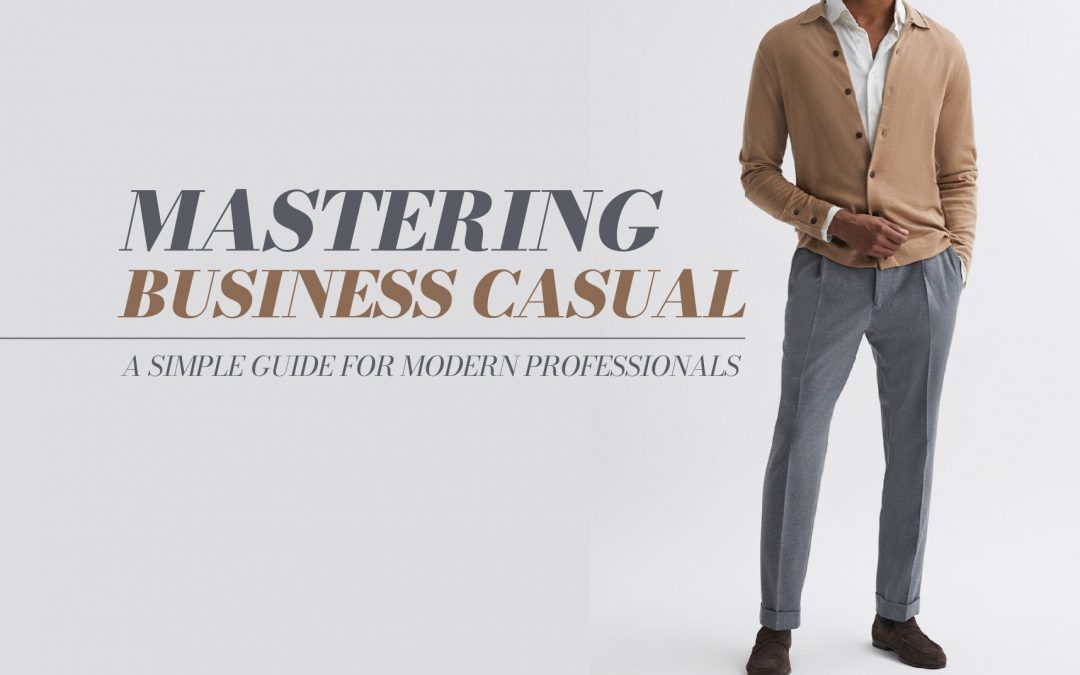
A good starting point is a pair of chinos or well-fitting trousers. These can be worn with a button-down shirt, polo, sweater, or simple knit top.
A blazer is useful when you want your outfit to look a little more polished. You can wear it with trousers or chinos without creating the formal look of a complete suit.
For shoes, loafers, dress shoes, derby shoes, and certain clean sneakers may work depending on the workplace.
Neutral colors are easy to combine. Navy, gray, black, white, beige, and light blue can all be useful choices.
Most importantly, pay attention to fit. Clothes should feel comfortable but still look neat.
Business Casual for Women
Women have plenty of options when it comes to business casual clothing.
Tailored pants, trousers, chinos, skirts, and simple dresses can all work well in many professional environments.
For tops, you can choose a blouse, button-down shirt, sweater, cardigan, or polished knit top.
A blazer can also be useful. It can make a simple outfit look more professional without making it feel too formal.
Shoes can include flats, loafers, ankle boots, low heels, and other polished styles.
Accessories can be simple. A watch, small earrings, a belt, or a structured handbag can complete an outfit without making it look overly formal.
As with any workplace dress code, the company’s expectations should come first.
Business Casual vs. Business Formal
Business casual is more relaxed than business formal.
Business formal usually means more structured clothing. A traditional men’s business formal outfit may include a suit, dress shirt, tie, and formal shoes. Women’s business formal clothing may include a tailored suit or formal professional dress.
Business casual removes some of that formality.
For example, you may wear trousers with a button-down shirt instead of a suit. A woman might choose tailored pants with a blouse instead of a formal suit.
You can still look professional without dressing in traditional formal business clothing.
What Clothes Work Well?
Building a business casual wardrobe does not require dozens of items.
Start with versatile basics.
A few pairs of trousers or chinos can provide the foundation for many outfits. Add several shirts, blouses, sweaters, or other simple tops.
A blazer or cardigan can give you another layer when needed.
Women may also include a couple of simple dresses or skirts. Men can add polos or additional button-down shirts for variety.
When choosing shoes, look for styles that are comfortable and polished.
Neutral colors are especially useful because they can be mixed and matched easily.
The goal is not to have a huge wardrobe. The goal is to have clothes that work well together.
What Should You Avoid?
What counts as too casual depends on the workplace. Still, some items are generally not suitable for a traditional business casual environment.
Sweatpants, gym clothes, flip-flops, ripped clothing, and graphic T-shirts are usually too casual.
Very worn sneakers may also be inappropriate in a more traditional office.
Clothing that is extremely short, tight, or revealing may not fit a professional workplace either.
You should also pay attention to the condition of your clothes. A wrinkled shirt or dirty shoes can make an otherwise professional outfit look careless.
If you are starting a new job and do not know what is acceptable, dressing slightly more professionally at first can help.
How to Build a Business Casual Wardrobe
You can build your wardrobe slowly.
Start with a few basic pieces that you can wear in different combinations. For example, two pairs of neutral trousers, several tops, one sweater, and a blazer can create many outfits.
Choose colors that work well together. Black, navy, gray, beige, white, and similar shades are easy to mix.
Once you have the basics, you can add patterns and more interesting pieces.
You do not need to spend a lot of money either. Focus on fit, comfort, quality, and versatility rather than buying too many items.
A smaller wardrobe can actually make getting ready for work easier.
Business Casual in Different Offices
One important thing to remember is that business casual can mean different things in different workplaces.
A corporate office may expect a more formal version of business casual. A creative company may allow jeans, sneakers, or more relaxed clothing.
The industry can make a difference too.
You should also consider the occasion. A normal office day may have a relaxed dress code, while a client meeting or business presentation may call for something more polished.
If you are attending an interview, it is also worth checking the company’s dress expectations beforehand.
When there is no clear information, asking someone at the company can save you from guessing.
Simple Ways to Look More Professional
You do not need expensive clothing to create a polished business casual look.
Start with clothes that fit properly. Even a simple outfit can look great when the fit is right.
Keep your clothing clean and wrinkle-free. Make sure your shoes are also in good condition.
Avoid adding too many accessories at once. A few simple pieces are often enough.
Layers can also make your wardrobe more useful. A cardigan, blazer, or lightweight jacket can change the look of a basic outfit.
Comfort matters too. You should be able to sit, walk, work, and move without constantly adjusting your clothes.
When you feel comfortable, you are more likely to feel confident throughout the workday.
Final Thoughts
Business casual is all about finding a balance between professional and relaxed clothing.
There is no single outfit that works for everyone. Trousers, chinos, button-down shirts, blouses, sweaters, skirts, dresses, blazers, and polished shoes can all be part of a business casual wardrobe.
The most important things are fit, cleanliness, comfort, and knowing what your workplace expects.
If you are new to business casual, start with simple pieces in neutral colors. Watch how your coworkers dress and adjust your outfits based on the environment.
Once you understand the dress code, putting together business casual outfits becomes much easier.
Frequently Asked Questions
What is business casual?
Business casual is a professional style that is more relaxed than formal business clothing. It usually combines neat, comfortable pieces with a polished appearance.
Can you wear jeans with business casual?
Some workplaces allow clean and well-fitting jeans while others do not. Always consider your company’s dress code before wearing them.
Are sneakers business casual?
Simple and clean sneakers may be acceptable in relaxed workplaces. Athletic or worn-out sneakers are usually less appropriate.
Do I need to wear a blazer?
No. A blazer can make an outfit look more polished, but it is not required for every business casual outfit.
What should I wear if I am unsure?
Start with a slightly more polished outfit. You can then observe what other employees wear and adjust your clothing to match the workplace.