Shopping for a swimsuit can feel surprisingly difficult when you have a larger bust. A style may look perfect online, yet once you try it on, the straps dig into your shoulders, the cups feel too small, or the whole swimsuit shifts when you move.
The problem isn’t your body. Often, it’s simply the way the swimsuit is designed.
Learning how to choose swimsuits for large busts starts with looking beyond color and appearance. Support, cup shape, band fit, straps, coverage, and fabric all play a role in how comfortable and secure swimwear feels.
Whether you’re shopping for a bikini, one-piece, or tankini, this step-by-step guide can help you find a swimsuit that fits properly and feels good to wear.
Step 1: Know Your Measurements
Before shopping, take accurate measurements of your bust and the area directly underneath it.
This is especially useful if you’re buying online. Swimsuit sizing can vary considerably between brands, so relying on a familiar Small, Medium, or Large isn’t always enough.
If a brand offers bra-sized swimwear, use your actual measurements rather than guessing your size.
A proper starting point makes it much easier to find a supportive swimsuit.
Step 2: Decide How Much Support You Need
Not everyone with a larger bust needs the same level of support.
Think about how you’ll use the swimsuit.
If you’re mostly relaxing beside a pool, moderate support may be enough. If you’re swimming, surfing, playing beach volleyball, or doing other active activities, you’ll probably want something more secure.
Features that can increase support include:
- Underwire
- Structured cups
- Wide underbust bands
- Adjustable straps
- Molded cups
- Built-in shelf bras
- Secure back closures
The goal is to find enough support without making the swimsuit feel uncomfortable.
Step 3: Start With the Right Style
Once you know how much support you need, choose a swimsuit style that suits your preferences.
One-Piece Swimsuits
A structured one-piece can provide excellent coverage and support. Look for styles with a supportive bust panel, adjustable straps, or built-in cups.
One-pieces are also available in many different shapes, so you don’t have to sacrifice style for coverage.
Bikini Tops
A bikini can work beautifully for a larger bust if you choose the right construction.
Look for bra-style bikini tops with defined cups, a secure band, and adjustable straps. These tend to provide more control than very minimal triangle tops.
Tankinis
Tankinis offer a middle ground between bikinis and one-pieces. They provide additional torso coverage while allowing you to choose a separate top and bottom.
A supportive bust section is still important. Don’t assume that a longer top automatically means better support.
Step 4: Check the Band
The band is one of the most important parts of a supportive swimsuit.
It should feel firm enough to hold the swimsuit securely around your body without digging painfully into your skin.
Raise your arms while trying the swimsuit on. If the band rides significantly upward, it may be too loose.
A common mistake is tightening the shoulder straps to compensate for a loose band. This can put unnecessary pressure on your shoulders.
Ideally, the band should provide most of the support while the straps help with positioning and comfort.
Step 5: Make Sure the Cups Fit
Cup fit matters just as much as band fit.
The cups should comfortably contain your bust without obvious spilling over the top or sides.
Watch for:
- Overflow above the cups
- Bulging near the armpits
- Gaping fabric
- Cups that shift when you move
- A center section that doesn’t sit comfortably
If the cups are too small, simply choosing a larger swimsuit size may not solve the problem. You may need a different cup size or a completely different cup shape.
This is one reason bra-sized swimwear can be so helpful.
Step 6: Look for Adjustable Straps
Adjustable straps are a small feature that can make a big difference.
They allow you to customize the fit according to your shoulder position and torso length. You can also adjust the amount of lift without having to replace the entire swimsuit.
Wide adjustable straps are particularly useful if thin straps tend to dig into your shoulders.
Check that the strap adjusters feel secure and don’t loosen easily while you’re wearing the swimsuit.
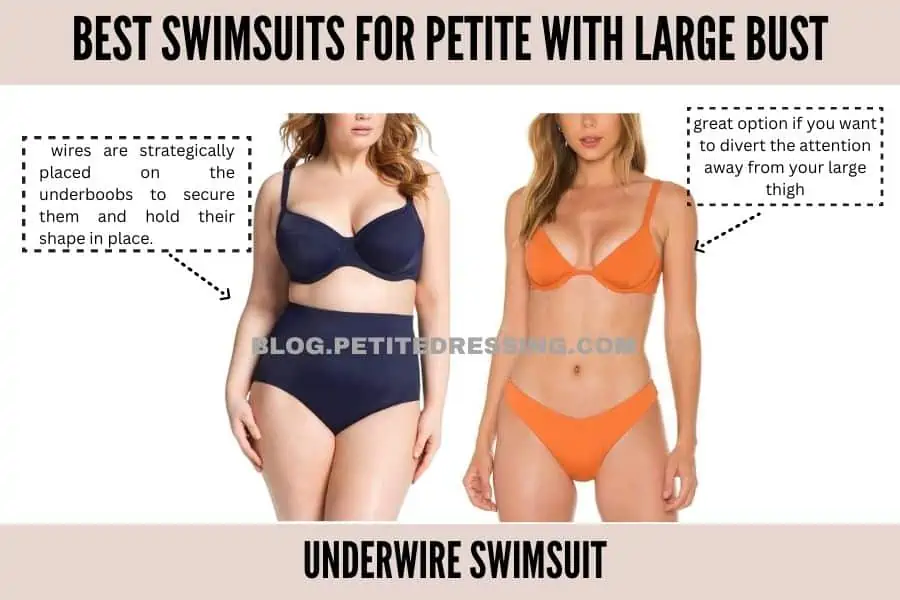
Step 7: Consider Underwire
Underwire isn’t essential for every person, but it can provide useful structure for a fuller bust.
It helps separate and support the bust while giving the swimsuit a more defined shape.
If you choose an underwire swimsuit, make sure the wire sits comfortably underneath the bust rather than pressing directly against breast tissue.
You shouldn’t feel sharp pressure or pinching.
If you prefer wire-free swimwear, look for a firm band and structured cups instead. There are plenty of supportive options without underwire.
Step 8: Think About Necklines
The neckline affects both style and coverage.
A V-neck can create a classic, open look, while a high neckline provides more coverage. Scoop and square necklines can offer a balance between the two.
Halter styles can also provide lift, but pay attention to where the weight sits. A narrow neck tie may become uncomfortable after several hours.
Choose the neckline that fits your comfort level and the activities you have planned.
Step 9: Choose the Right Coverage
Think about how secure you want to feel.
If you’re uncomfortable with a lot of cleavage, look for fuller cups or higher necklines. If you prefer a lower neckline, make sure the cups still provide enough support.
There’s no universal “correct” amount of coverage.
Your swimsuit should allow you to enjoy your day without constantly checking whether you’re exposed.
Step 10: Pay Attention to Fabric
Fabric can affect both support and durability.
A swimsuit needs enough stretch to move comfortably, but it should also recover its shape after stretching.
Very thin fabric may not provide enough structure for a larger bust, particularly if the swimsuit has minimal internal support.
Look for quality lining and a material that feels secure without being stiff.
If you’re buying online, read customer reviews for comments about stretch, thickness, and whether the swimsuit keeps its shape after use.
Step 11: Think About Your Activities
Your perfect swimsuit depends partly on what you’re planning to do in it.
For lounging, you can prioritize comfort and style.
For swimming or water sports, you’ll want a more secure fit.
If you plan to spend an entire day at the beach, consider comfort over several hours. Straps that feel fine for ten minutes may become irritating after a full afternoon.
A swimsuit should work for your lifestyle, not just look good in a photograph.
Step 12: Try the Movement Test
This is one of the most important steps.
When trying on a swimsuit, don’t simply stand in front of a mirror.
Move around.
Raise your arms, bend forward, sit down, twist your torso, and walk around.
Check whether the cups remain in place and whether the band moves excessively.
If you’re constantly pulling the swimsuit back into position, it’s probably not the right fit.
For active swimwear, movement testing is especially important.
Step 13: Don’t Forget the Bottom
Even though you’re shopping for a fuller-bust swimsuit, the bottom still matters.
Make sure the bottom fits comfortably and doesn’t create unnecessary pulling or digging.
For one-pieces, check the torso length. A swimsuit can fit perfectly around the bust but feel uncomfortable because it’s too short through the body.
Adjustable straps can help, but they can’t completely fix an incorrectly proportioned swimsuit.
Step 14: Choose Style You Actually Like
Supportive swimwear doesn’t have to look basic.
You can choose bright colors, prints, textured fabrics, color blocking, ruching, or other details that match your personality.
If you love a classic black one-piece, wear it. If you prefer a colorful bikini, choose that instead.
The best swimsuit is one that makes you feel comfortable and confident—not one that simply follows a list of body-shape rules.
Common Mistakes to Avoid
One common mistake is buying a swimsuit that’s too large overall because you need more room around the bust. This can leave the band and lower portion loose.
Another mistake is assuming that tighter straps automatically mean more support.
A swimsuit should not feel painfully tight. If you notice pressure around your neck, shoulders, or ribs, look for a different construction.
It’s also worth avoiding styles that require constant adjustment. If you’re already uncomfortable during the fitting, you’ll probably be even less comfortable after hours at the beach.
A Quick Shopping Checklist
Before buying, ask yourself:
- Does the band stay securely in place?
- Do the cups fully contain my bust?
- Are the straps comfortable?
- Can I adjust the fit?
- Does the swimsuit stay secure when I move?
- Is the fabric supportive enough?
- Is the coverage right for me?
- Does the style suit my planned activities?
- Do I actually like how it looks?
If the swimsuit passes these checks, you’re on the right track.
Final Thoughts
Knowing how to choose swimsuits for large busts is really about understanding fit and support rather than trying to follow strict fashion rules.
Start with accurate measurements, then focus on the band, cups, straps, and overall construction. Consider whether you prefer a one-piece, bikini, or tankini, and choose features based on how active you’ll be.
Most importantly, test the swimsuit while moving. A good fit should feel secure without making you constantly adjust or restrict your movement.
You don’t have to choose between support and style. With the right measurements and a little attention to construction, you can find swimwear that feels comfortable, stays in place, and lets you enjoy the water with confidence.
Leave a Reply