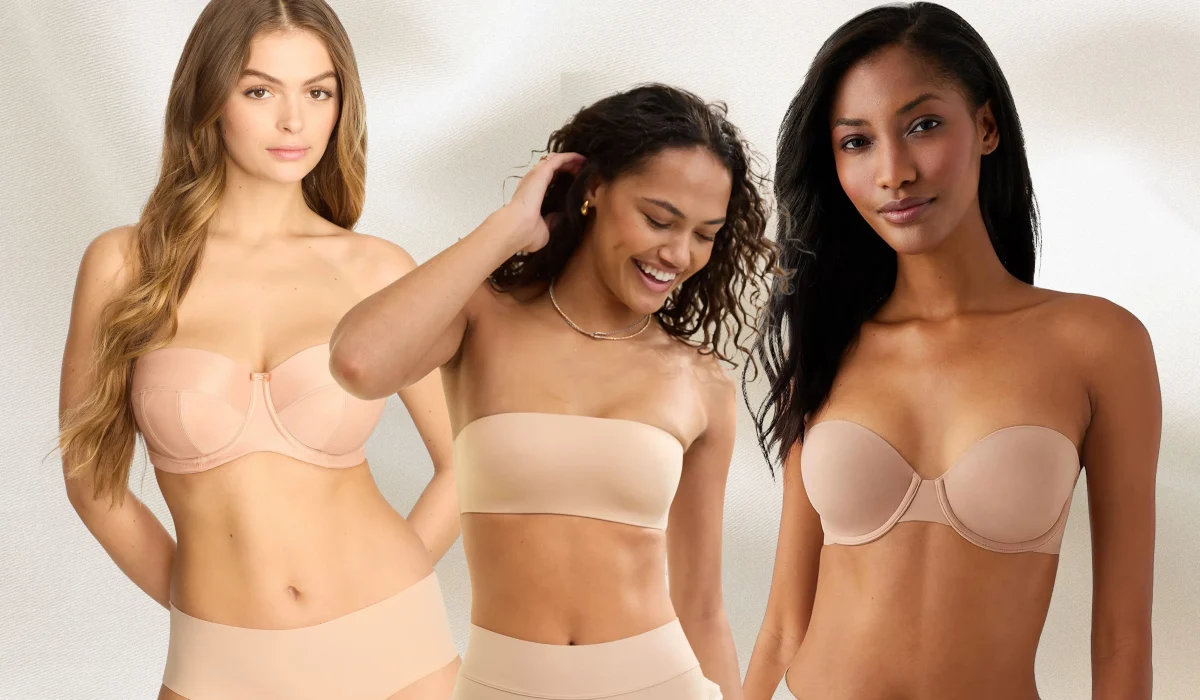
Finding a bra that fits well isn’t always easy, especially if you have a smaller bust. You may deal with cups that gape, straps that slip off your shoulders, or padded bras that feel much bulkier than you’d like.
And sometimes the problem isn’t your size at all. Different bras are designed with different cup shapes, depths, and proportions, so the same size can fit completely differently from one style to another.
The good news is that you have plenty of options. The best bras for small busts are not necessarily the ones with the most padding or the most structure. A good bra should match your natural shape, stay comfortably in place, and give you the look you want.
Whether you’re searching for an everyday bra, a little extra lift, or something comfortable for lounging, here’s what to consider before buying.
What Should You Look for in a Bra?
Start by thinking about fit rather than appearance.
A well-fitting bra should sit smoothly against your body without pinching or leaving large gaps. The band should feel secure, the cups should contain your bust comfortably, and the straps should stay in place without digging into your shoulders.
For a smaller bust, cup shape can be particularly important. If you often notice empty space near the top of your cups, you may have better results with a shallower or lower-cut cup rather than simply going down a size.
1. Try Demi-Cup Bras
Demi-cup bras are a useful option if traditional full-coverage cups tend to gape.
The cups are generally lower and cover less of the bust, which can allow them to sit closer to the body.
They can also create a naturally lifted appearance without relying on heavy padding.
A demi bra works particularly well under lower or wider necklines, making it a practical addition to an everyday wardrobe.
2. Consider Balconette Styles
Balconette bras have a horizontal, open neckline and often provide a lifted appearance.
They’re worth trying if you want more structure without a tall cup covering most of your chest.
For smaller busts, a balconette can create a nicely defined shape, especially when the cups aren’t excessively deep.
Try it underneath a square-neck or scoop-neck top to see how well the neckline works with your clothes.
3. Choose Light Padding for Everyday Wear
If you want a little more shape, lightly padded bras can be a good middle ground.
You don’t necessarily need thick push-up padding. A thin layer of padding can simply smooth the bust and create a more even silhouette underneath clothing.
Removable pads are particularly convenient because you can change the level of shaping depending on what you’re wearing.
For everyday use, look for padding that feels soft rather than stiff or overly structured.
4. Give Wireless Bras a Chance
Comfortable doesn’t have to mean shapeless.
Wireless bras can be an excellent choice for smaller busts, especially if you prefer a natural appearance.
Soft fabric, a secure underband, and adjustable straps can provide enough support for everyday activities without the pressure of an underwire.
Wireless bras are particularly useful for casual outfits, work-from-home days, travel, and relaxing.
If you don’t need much lift, there’s no reason to wear a heavily structured bra every day.
5. Try a Simple Bralette
Bralettes are another comfortable option worth exploring.
Because they’re usually made with flexible materials rather than rigid molded cups, they can adapt more easily to your natural shape.
Triangle bralettes can work particularly well if you prefer minimal coverage and a relaxed appearance.
For better everyday support, look for a bralette with an adjustable strap system and a reasonably firm band.
Lace bralettes can also double as a stylish layering piece underneath loose shirts or sweaters.
6. Look for Shallow Cups
Cup depth is often overlooked when shopping for bras.
If you have a smaller or shallower bust, a deep cup may leave empty space even when the band size is correct.
Instead of immediately choosing a smaller cup, try a bra with a shallower cup shape.
This can help the fabric sit closer to your body and reduce that frustrating gap at the top.
Remember that cup letters don’t tell the whole story. Two bras with the same labeled size can have completely different cup shapes.
7. Consider Plunge Bras
Plunge bras are useful when your wardrobe includes V-neck tops or dresses.
The center section sits lower, allowing the bra to remain hidden under deeper necklines.
Some plunge styles also bring the bust slightly toward the center, which can create a more defined appearance.
If you’re small-busted, look for a plunge bra that doesn’t have an excessively deep cup. The right shape should sit smoothly without leaving empty space.
8. Use Push-Up Bras When You Want Extra Lift
Push-up bras can be useful when you’re looking for additional lift or cleavage.
However, more padding isn’t always better.
A heavily padded bra can sometimes feel bulky or make the bust look less natural. If you want a subtle effect, choose a lightly padded style or one with removable inserts.
This gives you more control. You can add the inserts for a special occasion and remove them when you want a softer, everyday shape.
9. Get the Band Size Right
The band is responsible for much of a bra’s support.
It should sit securely around your rib cage without riding up your back or digging painfully into your skin.
If the band is too loose, your straps may end up doing too much of the work. This can cause them to slip or feel uncomfortable.
When trying on a new bra, move your arms and shoulders. The band should remain relatively stable as you move.
10. Adjust the Straps Properly
Straps that constantly fall down can be incredibly annoying.
Before assuming you need a different size, try adjusting them.
The straps should be secure but shouldn’t leave deep marks on your shoulders. If you have narrow or sloping shoulders, adjustable straps can make a significant difference.
Some styles also offer convertible straps, which can be useful if you wear different types of tops.
11. Think About Your Natural Shape
Breast shape matters just as much as breast size.
Some people have more fullness at the bottom, while others have more fullness at the top. Some have breasts that sit closer together, while others have more space between them.
This is why a bra that looks perfect on someone else may not work for you.
Try different cup shapes rather than assuming one particular style will always fit.
If you regularly experience gaping at the top, for example, a lower-cut or more flexible cup may be worth trying.
12. Choose the Right Bra for Your Clothes
You don’t need one bra for every outfit.
A smooth T-shirt bra is useful under fitted tops because it minimizes visible seams.
A plunge bra works well with V-neck clothing, while a strapless bra can be useful for special dresses and tops.
For casual outfits, a bralette or wireless bra may be all you need.
Building a small collection of different styles is often more practical than searching for one “perfect” bra.
13. Don’t Ignore Fabric
Comfort depends heavily on the fabric.
Soft microfiber, cotton blends, stretch lace, and breathable materials can all be useful for everyday bras.
If you live somewhere warm, lightweight and breathable fabrics may be especially comfortable.
For special occasions, lace and satin can look beautiful, but make sure the fabric doesn’t scratch or irritate your skin.
A bra should feel comfortable after several hours—not just during the first few minutes of trying it on.
Common Bra-Fitting Mistakes
One of the most common mistakes is choosing a smaller bra simply because you want a closer fit.
A tight band doesn’t automatically provide better support.
Another mistake is assuming that cup gaping always means the cup size is too large. The shape or depth of the cup may simply be wrong for you.
It’s also easy to buy heavily padded bras because you think they’re the only way to create a fuller appearance. In reality, lightly padded and well-shaped cups can often provide a more natural result.
Finally, don’t ignore comfort. If a bra pinches, scratches, or constantly needs adjusting, it probably isn’t the right one.
A Simple Buying Checklist
Before purchasing a bra, check:
- Does the band sit securely?
- Are the cups smooth against your body?
- Is there noticeable gaping?
- Do the straps stay in place?
- Does the center section sit comfortably?
- Can you move your arms freely?
- Is the fabric comfortable?
- Does the style work with your wardrobe?
- Do you actually like how it feels?
If most of these answers are yes, you’ve likely found a good match.
Final Thoughts
The best bras for small busts aren’t about creating a completely different body shape. They’re about finding a comfortable design that works with your natural proportions.
Demi and balconette bras can provide shape without excessive coverage, while lightly padded styles can add subtle definition. Wireless bras and bralettes are excellent for comfort, and plunge or T-shirt bras can solve specific outfit needs.
Start by getting your band and cup measurements right, then experiment with different cup shapes and styles. Don’t be afraid to try something new if your usual bra isn’t fitting properly.
Most importantly, remember that bra sizing isn’t universal. A bra that fits beautifully in one style may not work in another.
Once you learn which shapes, fabrics, and features suit you best, finding a comfortable and attractive bra becomes much easier.
Leave a Reply