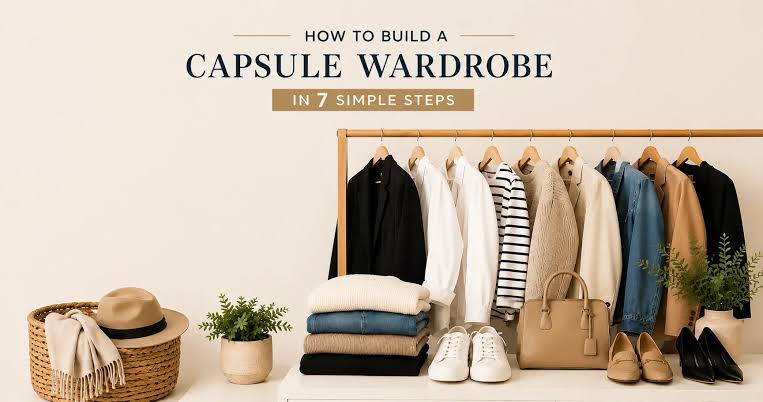
Looking stylish does not have to come with a high price tag. You can have a well-organized wardrobe with plenty of outfit options without constantly spending money on new clothes.
The secret is to shop more intentionally and choose pieces that can be worn in several different ways. This is where a budget capsule wardrobe can make a big difference.
A capsule wardrobe is a collection of clothing selected because the pieces work well together. When you add a budget-friendly approach, the focus becomes even more practical: use what you already have, avoid unnecessary purchases, and spend your money on items that offer real value.
If you want to simplify your closet while saving money, follow these simple steps to build a budget capsule wardrobe that works for your everyday life.
What Is a Budget Capsule Wardrobe?
A budget capsule wardrobe is a carefully planned collection of clothes, shoes, and accessories that can be mixed and matched to create different outfits without requiring a large shopping budget.
It does not mean that you have to own a certain number of items.
For one person, a capsule wardrobe might contain a few dozen pieces. For another, it may be larger because of work, family responsibilities, weather, or different activities.
The main purpose is to make your wardrobe useful, flexible, affordable, and easy to manage.
Step 1: Understand Your Daily Clothing Needs
Before buying anything, take a moment to think about your lifestyle.
What do you normally wear during the week?
If you work in an office, you may need trousers, shirts, blouses, and smart layers. If you work from home, comfortable casual clothing may be more important. If you regularly go out, you may want a few pieces that can be dressed up.
Your wardrobe should reflect what you actually do.
There is no benefit in spending money on formal clothing if you almost never attend formal occasions.
Step 2: Set a Realistic Budget
The next step is deciding how much money you can comfortably spend.
You do not need to build the entire wardrobe at once.
If your budget is limited, consider creating your capsule wardrobe over several weeks or months. This allows you to purchase important pieces gradually instead of making one large shopping trip.
You can also divide your budget into categories such as everyday clothing, shoes, outerwear, and accessories.
Having a spending limit makes it easier to avoid unnecessary purchases.
Step 3: Start With the Clothes You Own
Before visiting a store or browsing online, shop your own closet.
Take out the clothes you already have and look at everything together.
Sort your items into categories such as:
- Clothes you wear often
- Clothes you occasionally wear
- Items you never wear
- Clothes that need repairs
- Pieces you are unsure about
You may discover that you already own many of the basics needed for a capsule wardrobe.
There is no reason to spend money replacing something that already works.
Step 4: Find Your Wardrobe Favorites
Look closely at the clothes you wear most often.
Maybe you always reach for a particular pair of jeans because they are comfortable. Perhaps you prefer simple T-shirts, oversized shirts, neutral trousers, or soft sweaters.
These favorites can help you understand your personal style.
Pay attention to the colors, materials, fits, and silhouettes you naturally choose. When you shop for missing pieces later, use these preferences as your guide.
Step 5: Create a Coordinated Color Palette
A simple color palette can make mixing and matching much easier.
Choose a few colors that work well together and that you genuinely enjoy wearing.
Neutral shades such as black, white, cream, gray, navy, brown, and denim can create a strong foundation. Then add one or two colors that give your wardrobe more personality.
For example, you could combine black, cream, denim, and burgundy.
You do not have to make your wardrobe completely neutral. Prints and brighter colors are perfectly acceptable if they work with your existing pieces.
Step 6: Build Your Core Clothing Collection
Once you know what you already have, identify the essential gaps.
A practical capsule wardrobe may include:
- Basic T-shirts
- A blouse or button-down shirt
- One or two pairs of jeans
- Neutral trousers
- Comfortable casual pants
- A sweater or cardigan
- A simple dress
- A versatile jacket
- Everyday shoes
- A practical bag
This is only a guide.
If you do not wear dresses, you do not need to buy one. If you live somewhere warm, you may need more lightweight clothing and fewer heavy layers.
Your capsule wardrobe should be customized to your needs.
Step 7: Choose Pieces That Work Together
When money is limited, every purchase should have a purpose.
Before buying an item, think about your existing wardrobe.
Can the new top be worn with your jeans and trousers? Can the jacket work with your dresses and casual outfits? Can the shoes be worn with several different types of clothing?
The more combinations an item creates, the more useful it becomes.
A good capsule piece should not depend on one specific outfit.
Step 8: Never Ignore Comfort and Fit
A low price does not make clothing a good bargain if you never want to wear it.
When shopping, pay attention to how the garment feels.
Check whether you can sit, walk, bend, and move your arms comfortably. Look at the stitching and make sure the fabric does not feel unpleasant against your skin.
Do not become too focused on the size printed on the label. Different brands use different sizing systems.
The most important thing is how the clothing actually fits your body.
Step 9: Explore Affordable Shopping Options
You have many options when shopping on a limited budget.
Instead of always buying full-price clothing, consider:
- Thrift stores
- Secondhand marketplaces
- Outlet stores
- Clearance sections
- End-of-season sales
- Clothing swaps
- Resale shops
Secondhand shopping can be particularly useful for finding coats, jackets, jeans, dresses, and other wardrobe staples at lower prices.
Always check the condition carefully before purchasing.
Step 10: Think About Cost Per Wear
A clothing item’s price is only part of the story.
Suppose you spend $12 on a top but wear it only once. That purchase may not provide much value.
Now imagine spending $40 on a pair of shoes that you wear several times a week for a year. The higher-priced item could actually be the smarter purchase.
This is why cost per wear is useful when building a budget wardrobe.
Think about how frequently you expect to use something, not just how cheap it is.
Step 11: Be Careful With Sales
Sales can help you save money, but they can also encourage unnecessary shopping.
A discount is not a reason to buy something you do not need.
Before purchasing a sale item, ask yourself:
Would I buy this if it were full price?
Does it work with my existing clothes?
Will I wear it regularly?
Does it fit comfortably?
If the answer is mostly no, keeping the money is usually the better choice.
Step 12: Create Outfits From Your Capsule Pieces
After selecting your clothing, spend some time experimenting with combinations.
Take one pair of jeans and style it with several tops. Add different shoes, jackets, and accessories to see how many looks you can create.
Do the same with your trousers and dresses.
You might be surprised by how many outfits you can create from a relatively small collection.
Taking photos of your favorite combinations can also make getting dressed easier on busy mornings.
Step 13: Use Accessories for Variety
You do not always need more clothing when you want your wardrobe to feel different.
Accessories can change the appearance of simple outfits.
A scarf, belt, necklace, earrings, handbag, or sunglasses can add a completely different feel to the same basic clothes.
Because accessories can be relatively inexpensive, they can be a useful way to introduce new colors or styles without making a large purchase.
Step 14: Buy Slowly and Intentionally
One of the biggest advantages of building a capsule wardrobe slowly is that you have time to learn what you actually need.
Instead of buying ten new pieces at once, purchase one useful item when you identify a genuine gap.
After wearing it for a while, you will have a better idea of what should come next.
This approach can also prevent your capsule wardrobe from becoming another overcrowded collection.
Step 15: Review Your Wardrobe Regularly
Your clothing needs will not always stay the same.
Your job, lifestyle, personal taste, or the seasons may change.
Every few months, review your wardrobe and ask:
- Which clothes am I wearing most?
- Which pieces are sitting untouched?
- Do I have anything that needs repair?
- Are there important items missing?
- Does my wardrobe still match my lifestyle?
Use your answers to make small changes instead of completely rebuilding your closet.
Mistakes to Avoid
Building a budget capsule wardrobe sounds simple, but there are a few common mistakes to watch out for.
Buying large quantities of cheap clothing can quickly defeat the purpose. Purchasing trendy pieces that do not match your wardrobe can also lead to wasted money.
Another common mistake is trying to copy someone else’s capsule wardrobe.
Your ideal wardrobe may look completely different from another person’s, and that is perfectly fine.
Final Thoughts
Learning how to build a budget capsule wardrobe is not about creating the cheapest possible closet. It is about making smarter decisions with the money you have.
Start by looking at your current wardrobe, identifying your most useful pieces, and understanding what is genuinely missing. Choose a simple color palette and focus on versatile clothing that can be worn in several combinations.
Shop secondhand, take advantage of genuine sales, and think about cost per wear before making larger purchases.
Most importantly, do not rush the process.
A capsule wardrobe does not need to be completed in one day. Build it gradually, keep the pieces you love, and spend money only when a purchase adds real value to your wardrobe.
With a little planning, you can create a stylish and functional wardrobe that saves both money and time.
Leave a Reply