Scoring goals is one of the most rewarding parts of soccer, but becoming a reliable finisher takes more than simply kicking the ball as hard as possible. Good shooting comes from a combination of technique, accuracy, balance, timing, confidence, and knowing when to take the shot.
If your shots often go wide, over the crossbar, or straight at the goalkeeper, don’t get discouraged. These are common problems for developing players, and most can be improved with focused practice.
If you’re wondering how to improve soccer shooting, the best place to start is with the basics. Build good technique first, then gradually add movement, pressure, and game-like situations.
Here is a step-by-step approach that can help you become a more confident shooter.
1. Start With Your Body Position
Good shooting begins before your foot even touches the ball.
When preparing to shoot, place your non-kicking foot beside the ball and point it generally toward your target. Keep your body balanced and avoid leaning too far backward.
Your posture can affect the flight of the ball. Leaning too far backward can cause the ball to rise, while staying more controlled over the ball can help you produce a lower strike.
Practice your stance without worrying about power. The goal is to make the movement feel natural.
2. Learn Where to Strike the Ball
Ball contact is one of the most important parts of shooting technique.
For a firm, driven shot, use the laces or instep of your foot and aim for a clean strike through the ball.
For a controlled finish, the inside of the foot can provide more surface area and make placement easier.
Spend time practicing both. You don’t need to hit the ball extremely hard. Focus on making clean contact and sending it toward your intended target.
3. Work on Accuracy Before Power
Many beginners believe a harder shot is automatically a better shot.
It isn’t.
A powerful shot that misses the goal doesn’t help your team. A controlled shot placed away from the goalkeeper can be much more effective.
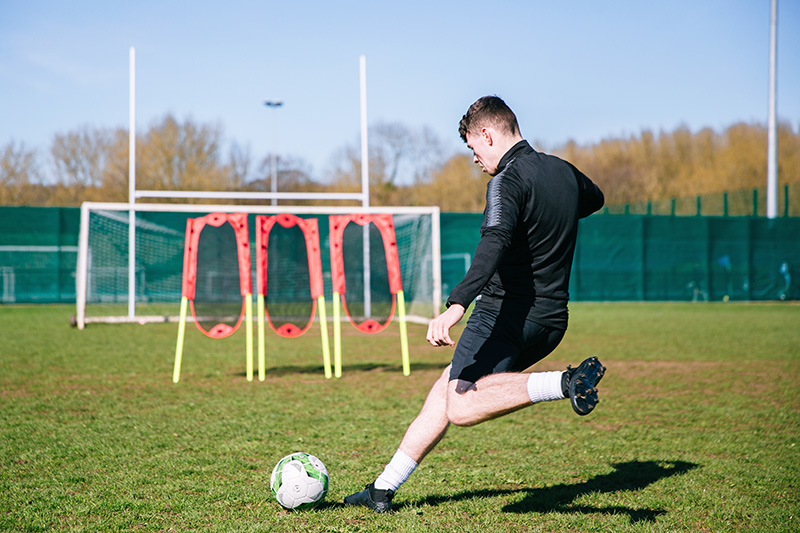
Set up a target inside the goal and practice hitting it repeatedly.
Try aiming for different areas, such as:
- The lower corners
- The far side of the goal
- Areas near the posts
- Open spaces away from the goalkeeper
Once you can consistently hit your target, gradually increase the power.
4. Practice With Both Feet
Being comfortable with both feet can give you more shooting options.
Your stronger foot may feel natural, but your weaker foot needs regular attention too.
Start with simple exercises. Shoot a stationary ball from a short distance using your weaker foot. Once that becomes comfortable, try moving shots and finishes after a pass.
Don’t expect your weaker foot to feel perfect immediately. Give it regular practice and focus on improvement rather than comparing it with your dominant foot.
5. Improve Your Follow-Through
A good shot doesn’t end the moment your foot contacts the ball.
Your kicking leg should continue naturally through the strike. This follow-through helps you maintain a smooth motion and transfer energy into the ball.
Avoid stopping your leg suddenly after contact.
At the same time, don’t force an exaggerated follow-through. Your movement should feel balanced and natural.
If your shots feel inconsistent, slow down and pay attention to the entire motion from your approach to your follow-through.
6. Learn to Control Your Power
Different situations require different types of shots.
You might need a controlled finish from close range, a driven shot from outside the box, or a quick first-time attempt when you don’t have much space.
Practice changing the amount of power you use.
Try three levels:
- Light and controlled
- Medium and accurate
- Firm and powerful
This helps you understand how your body and foot contact affect the ball.
The goal is to have options instead of using maximum power every time.
7. Practice Shooting From Different Angles
Shooting from the center of the field is useful, but matches rarely give you the exact same opportunity every time.
Practice shooting from different positions.
Take attempts from:
- Straight in front of the goal
- The left side
- The right side
- Slight angles
- Just inside the penalty area
- Outside the penalty area when appropriate
Different angles force you to adjust your body position and target selection.
This can make your finishing more adaptable during real games.
8. Add Dribbling Before the Shot
A great way to make shooting practice more realistic is to combine dribbling and finishing.
Set up a cone several meters from the goal. Dribble toward it, move around it, and take your shot.
You can also practice receiving the ball, taking one controlling touch, and shooting.
These drills teach you to transition quickly from controlling the ball to striking it.
In a match, you may not have several seconds to prepare your shot, so learning to finish after movement is important.
9. Practice First-Time Finishing
Sometimes there isn’t enough time to take a touch before shooting.
First-time finishing teaches you to strike a moving ball without stopping it first.
Ask a teammate to pass the ball across your path and attempt to finish immediately.
Start with slow, accurate passes. As you improve, increase the speed and vary the direction.
Don’t worry if these shots aren’t perfect at first. Timing and coordination take practice.
10. Learn to Watch the Goalkeeper
Shooting isn’t only a technical skill. It’s also about making decisions.
Before taking your shot, try to notice where the goalkeeper is positioned.
If the goalkeeper is closer to one side, another area of the goal may be available.
You don’t need to stare at the goalkeeper throughout the entire movement. Instead, scan the situation before you shoot and choose your target quickly.
This is one reason game-like training is so valuable.
11. Practice Under Pressure
It’s easy to shoot accurately when you’re standing alone with no one challenging you.
Real matches are different.
Once your technique is comfortable, introduce pressure into your practice.
Ask a teammate to defend you lightly. Receive a pass, control the ball, and try to create a shooting opportunity.
You can gradually make the space smaller or give yourself less time.
This helps you develop quick decision-making along with your shooting technique.
12. Build a Consistent Shooting Routine
You don’t need a professional training setup to improve.
A simple routine performed regularly can make a big difference.
Try this:
- 5 minutes: Ball touches and light passing
- 10 minutes: Accuracy shooting
- 10 minutes: Weaker-foot shooting
- 10 minutes: Dribble and shoot
- 10 minutes: First-time finishing
- 10 minutes: Shooting under pressure
Focus on quality rather than simply counting how many shots you take.
If your technique starts breaking down because you’re tired, take a short break and reset.
Common Soccer Shooting Mistakes
As you practice, watch for these common mistakes:
- Trying to hit every shot with maximum power
- Leaning too far backward
- Planting the non-kicking foot too far from the ball
- Looking only at the goal and ignoring the ball during contact
- Using only the stronger foot
- Stopping the kicking motion immediately
- Shooting without considering the goalkeeper
- Practicing only stationary shots
- Rushing instead of staying balanced
Correcting these small habits can significantly improve your consistency.
Make Your Training More Game-Like
Once the basics become comfortable, try to recreate situations you might actually face during a match.
Practice receiving a pass with a defender nearby. Shoot after a short dribble. Finish from different angles. Give yourself only a few seconds to make a decision.
You can also practice with teammates through small-sided games.
These exercises help connect technical shooting ability with awareness and decision-making.
After all, a great shot isn’t very useful if you don’t recognize the opportunity to take it.
Final Thoughts
Improving your soccer shooting is a gradual process. You won’t become a great finisher after one training session, but consistent practice can make a noticeable difference.
Start with body position and clean ball contact. Focus on accuracy before adding power, practice with both feet, and learn to control the strength of your shots.
Then make your training more challenging by adding dribbling, moving passes, different angles, defenders, and goalkeeper awareness.
Most importantly, don’t become frustrated by missed shots. Missing is part of learning. Pay attention to why the shot went wrong and make a small adjustment on the next attempt.
With regular practice and a focus on good technique, you’ll become more confident in front of goal—and much better prepared when a real scoring chance comes your way.