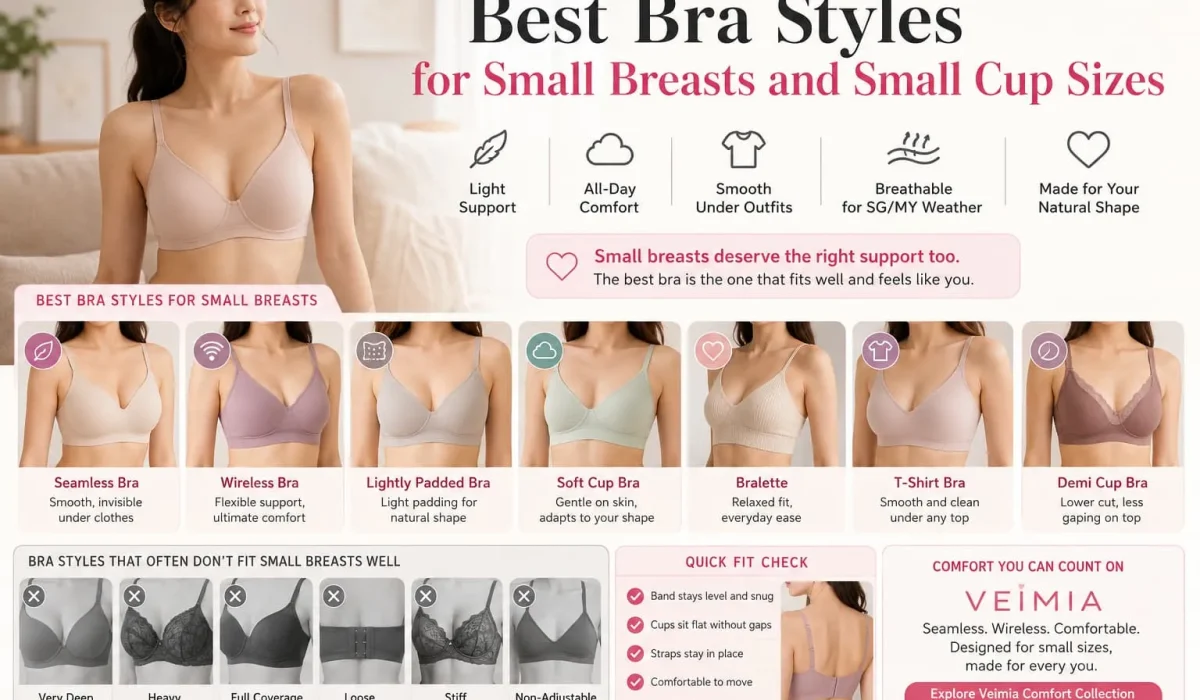
Finding a bra that fits properly can be harder than it sounds. If you have a small bust, you may have experienced cups that gape, straps that keep slipping, or padded bras that make your shape look less natural than you’d like.
The good news is that these problems are usually about finding the right design—not about needing to change your body.
Learning how to choose bras for small busts starts with understanding your measurements, breast shape, preferred level of coverage, and the kind of support you actually need. Once you know what to look for, you can stop relying on trial and error and start choosing bras with more confidence.
Here’s a simple step-by-step approach.
Step 1: Start With Your Measurements
The first step is getting your measurements as accurately as possible.
You’ll generally need your underbust and bust measurements. Your underbust helps determine the band size, while the difference between the measurements helps determine the cup size.
However, don’t treat the resulting size as a permanent number.
Bra sizing varies between brands and even between different styles from the same brand. Use your measurements as a starting point, then check the individual brand’s size guide.
A good fit matters much more than the number or letter printed on the label.
Step 2: Pay Attention to Your Breast Shape
Size isn’t the only thing that affects bra fit.
Your breast shape can determine which cup designs work best for you.
For example, if you have a relatively shallow shape, a deep molded cup may leave empty space at the top even when the band is correct.
If you have more fullness at the bottom, a lower-cut cup may sit more naturally.
Spacing also matters. Breasts that sit farther apart may feel more comfortable in a bra designed with a wider center placement.
So when a bra doesn’t fit, don’t immediately assume the size is wrong. The shape of the bra may simply not match your body.
Step 3: Decide What You Want From the Bra
Before shopping, think about the purpose of the bra.
Are you looking for:
- Everyday comfort?
- A smooth shape under T-shirts?
- Extra lift?
- More cleavage?
- A natural appearance?
- Something for a special occasion?
- A comfortable lounge bra?
Your answer will help narrow down your options.
You don’t need one bra to perform every job. A small collection of different styles can be much more useful.
Step 4: Choose the Right Cup Shape
Cup shape is particularly important for a smaller bust.
If you often see empty space near the top of a traditional full-coverage cup, try a lower-cut design.
Demi Cups
Demi bras have shorter cups and provide less coverage across the upper bust. They can be a good choice if tall cups tend to gape.
Balconette Bras
Balconette styles usually have a more open neckline and can create a lifted appearance.
Plunge Bras
Plunge bras have a lower center and are useful for V-neck clothing. Some designs also bring the bust slightly toward the center.
Soft Cups
Soft, flexible cups can follow your natural shape instead of creating a rigid outline.
Trying several cup shapes is often more helpful than simply trying different sizes.
Step 5: Consider Light Padding
Padding can be useful, but you don’t need a heavily padded bra to create shape.
Lightly lined cups can smooth the appearance of the bust and prevent clothing from showing unevenness underneath.
If you want more versatility, look for removable pads. You can use them when you want additional lift and remove them when you prefer a more natural look.
Avoid choosing padding purely because you think a larger amount is automatically more flattering.
Comfort and proportion should come first.
Step 6: Decide Whether You Want Underwire
Underwire is a personal choice.
Some people like the structure and lift it provides, while others find wireless bras much more comfortable.
If you choose an underwire bra, the wire should sit underneath the bust rather than pressing into breast tissue.
There should also be no painful pinching around the sides.
If you prefer a wire-free option, look for a supportive band and a well-designed cup. A wireless bra can still provide a secure fit.
Step 7: Check the Band
The band should feel comfortably snug around your rib cage.
It shouldn’t ride up your back when you move, but it also shouldn’t feel so tight that you can’t comfortably breathe or move.
Try raising your arms and twisting your body while wearing the bra.
If the band moves dramatically, you may need a different size or style.
Remember that the band provides much of the bra’s support. The straps shouldn’t have to carry all the weight.
Step 8: Adjust the Straps
Straps should be adjusted so they stay securely on your shoulders without digging into your skin.
If the straps keep falling down, don’t automatically tighten them as much as possible.
First check whether the band fits correctly.
Adjustable straps are especially helpful if you have narrow or sloping shoulders. Convertible straps can also be useful when you wear different types of tops.
Step 9: Check for Cup Gaping
Cup gaping is one of the most common problems when shopping for a small-bust bra.
Stand naturally and look at the top edge of the cup.
If there is a large gap between the fabric and your body, the bra may be too deep or too tall for your shape.
But don’t immediately size down.
Try a shallower cup, demi style, balconette, or flexible fabric first. You may discover that the original size was correct and the cup shape was the real issue.
Step 10: Make Sure the Center Fits
If you’re wearing a bra with separate cups and a center bridge, check how it sits between your breasts.
The center should feel comfortable and shouldn’t press painfully against your chest.
If your breasts are more widely spaced, some bras may feel as though they’re pulling them unnaturally toward the middle.
Try different center designs until you find one that follows your natural shape.
Step 11: Choose Fabric for the Way You Live
Think about comfort throughout the day.
For everyday use, soft microfiber, cotton blends, breathable fabrics, and stretch lace can all be good choices.
If you live in a hot climate, lightweight and breathable materials may be particularly useful.
For special occasions, lace or satin can add a beautiful touch, but make sure the fabric isn’t irritating against your skin.
A bra shouldn’t become uncomfortable after you’ve been wearing it for several hours.
Step 12: Match the Bra to Your Clothes
Different outfits need different bra styles.
A smooth T-shirt bra is useful under fitted tops because it reduces visible seams.
A plunge bra works well with V-neck dresses and tops.
A strapless bra can be useful for certain occasion outfits, while a bralette can work well under relaxed or layered clothing.
Think about your wardrobe before buying. The best bra is one you’ll actually have opportunities to wear.
Step 13: Test the Fit Before Buying
If you’re shopping in person, don’t rush through the fitting.
Put the bra on properly and adjust the straps. Move your arms, sit down, bend forward, and twist your torso.
Check whether the cups stay in place and whether the band remains comfortable.
If you’re shopping online, check the retailer’s return policy before ordering.
Customer reviews can also be useful, particularly comments about cup depth, gaping, strap placement, and sizing.
Common Mistakes to Avoid
One common mistake is assuming that a smaller bust doesn’t need a properly fitted bra.
Another is choosing an extremely tight band because you want more support. A band should be secure, not painful.
It’s also easy to assume that cup gaping means you need a smaller cup size. Sometimes the problem is simply that the cup is too tall or too deep.
Finally, don’t buy a bra just because it looks attractive in a photograph. A beautiful bra that doesn’t fit comfortably won’t become a favorite.
A Quick Fit Checklist
Before buying, ask yourself:
- Does the band stay level?
- Do the cups sit smoothly?
- Is there any obvious gaping?
- Do the straps remain secure?
- Does the underwire feel comfortable, if present?
- Does the center section sit naturally?
- Can you move freely?
- Does the fabric feel comfortable?
- Does the bra work with your usual clothing?
If the answer is yes to most of these questions, you’re probably close to the right fit.
Final Thoughts
Learning how to choose bras for small busts is less about finding a magical style and more about understanding what your body needs.
Start with accurate measurements, then pay attention to your breast shape and the depth of the cups. Experiment with demi, balconette, plunge, lightly padded, wireless, and bralette styles until you find what feels right.
Don’t rely only on the size printed on the label. A bra should sit smoothly, stay comfortably in place, and work with your everyday wardrobe.
Most importantly, choose support and comfort according to your own preferences. You don’t need heavy padding or a highly structured design unless you actually want one.
Once you understand how different bra shapes fit your body, shopping becomes less about guessing and more about finding styles that genuinely work for you.
Leave a Reply