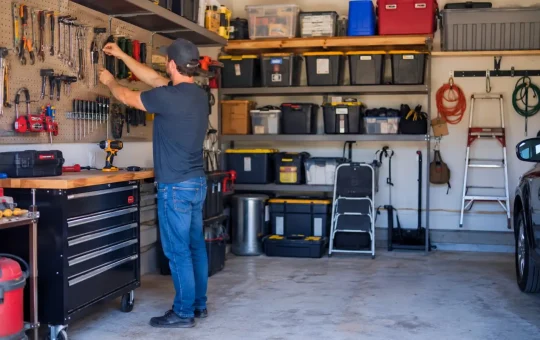
A garage can become the easiest place in the house to hide clutter. Something doesn’t have a home? Put it in the garage. Don’t know where to store those old boxes? The garage will handle it.
Until one day, you open the garage door and realize you can barely walk through it.
If this sounds familiar, you’re definitely not alone. Garages often become a mix of tools, sports equipment, seasonal decorations, gardening supplies, boxes, and things we aren’t quite ready to throw away.
The good news is that you don’t need a massive renovation to organize a garage. With some honest decluttering and a practical storage system, you can turn the space into an area that’s useful, accessible, and much easier to maintain.
Start With a Clear Goal
Before pulling everything out, decide what you want your garage to do for you.
Do you want to park a car inside? Create a workshop? Store gardening tools? Keep bicycles and sports equipment organized?
Your answer will determine how much space you need to leave open.
If parking is a priority, don’t let storage slowly take over the area around your vehicle. If you use the garage as a workshop, make sure your tools and work surfaces are easy to access.
Knowing the purpose of the space makes decluttering much easier.
Declutter Before You Organize
Storage shelves and plastic bins won’t solve a clutter problem if you’re keeping things you don’t need.
Start by going through everything in the garage.
Create a few simple categories:
- Keep
- Donate or sell
- Recycle
- Dispose of
- Move elsewhere
Be honest about items you haven’t used in years.
That broken chair you’ve been meaning to fix, old sports equipment nobody uses, and boxes of forgotten household items are all taking up valuable space.
You don’t have to get rid of everything. The goal is to make room for things that are actually useful.
Work in Small Sections
Trying to organize an entire garage in one afternoon can quickly become overwhelming.
Instead, divide the space into sections.
You might start with one wall, then move to the workbench, storage shelves, tools, and finally the floor.
Finishing one area before moving to another gives you a sense of progress and prevents the entire garage from becoming one giant pile.
If your garage is extremely cluttered, even working for 30 minutes at a time can make a difference.
Create Garage Storage Zones
Once you’ve decluttered, group similar items together.
Create specific zones for different categories, such as:
- Gardening tools
- Hand and power tools
- Sports equipment
- Car supplies
- Holiday decorations
- Outdoor equipment
- Household storage
Keeping related items together makes everything easier to find.
For example, you shouldn’t have a shovel in one corner, gardening gloves on a shelf across the garage, and plant supplies hidden behind boxes.
A gardening zone keeps everything you need in one place.
Use the Walls
One of the best ways to organize a garage is to use vertical space.
The floor is valuable, especially if you want to park a vehicle inside.
Wall-mounted shelves, pegboards, hooks, and storage rails can help keep tools and equipment off the floor.
Hand tools are particularly easy to organize on a pegboard because you can see exactly what you have.
Hooks can also hold bicycles, ladders, hoses, and other bulky items when appropriate and safely installed.
Take Advantage of Ceiling Storage
If your garage has suitable ceiling space, don’t overlook it.
Overhead storage can be useful for lightweight or seasonal items that you don’t need regularly.
Holiday decorations, camping gear, or other occasional-use belongings can be stored in clearly labeled containers overhead.
However, make sure ceiling storage systems are properly installed and rated for the items you’re storing. Keep frequently used or heavy objects somewhere easier and safer to access.
Keep Frequently Used Items Accessible
Not everything should go into a storage bin.
Think about what you use every week.
If you’re constantly reaching for a screwdriver, garden hose, bicycle pump, or cleaning supplies, keep those items somewhere easy to access.
Items you use only once or twice a year can go higher up or farther toward the back.
This simple approach makes your garage much more convenient.
Get Tools Under Control
Tools are one of the biggest sources of garage clutter.
Instead of keeping them in random boxes, give them a dedicated area.
A pegboard, tool chest, drawer organizer, or wall-mounted rack can keep frequently used tools visible and easy to grab.
Group similar tools together. Keep screwdrivers in one section, wrenches together, and power tools in another.
After using a tool, return it to its designated spot. This small habit can prevent your workbench from becoming cluttered again.
Organize Sports Equipment
Balls, bicycles, helmets, bats, and other sports equipment can quickly take over the garage floor.
Give sports gear its own zone.
Use wall hooks, baskets, racks, or sturdy shelves to keep equipment contained.
For smaller items, a large labeled bin can work well.
Keep the equipment your family uses most often at an accessible height, while seasonal gear can be stored farther away.
Store Seasonal Decorations Together
Holiday decorations don’t need to occupy your easiest-to-reach storage areas all year.
Put seasonal items into sturdy, clearly labeled containers.
Keep decorations for each holiday together whenever possible.
Clear labels mean you won’t have to open five boxes just to find one string of lights.
If you have a lot of seasonal storage, consider keeping it on higher shelves or overhead storage where it won’t interfere with everyday activities.
Label Your Storage
Labels are a small detail that can make a big difference.
If you use storage bins, label the outside with a clear description of what’s inside.
Instead of writing “Stuff,” use specific labels such as “Christmas Lights,” “Camping Gear,” or “Painting Supplies.”
This saves time and also helps everyone in the household return items to the right place.
Keep the Floor Clear
A clutter-free garage floor isn’t just about appearance.
Keeping walkways clear makes the space safer and makes it easier to park, move equipment, and access storage.
Try to keep large items against walls or on appropriate shelving.
If something is constantly sitting in the middle of the garage, ask whether it needs a better storage solution.
Create a Donation Box
Keep a designated donation box or bin somewhere in the garage.
Whenever you come across something you no longer need but that is still useful, put it in the box.
Once it’s full, donate the contents.
This prevents unwanted items from slowly finding their way back into your storage areas.
Be Careful With Garage Safety
Organization should never come at the expense of safety.
Store chemicals, paints, automotive products, and other potentially hazardous materials according to their labels and local disposal requirements. Keep them away from children and pets.
Don’t overload shelves or hang heavy objects from unsuitable surfaces.
Make sure walkways, doors, electrical panels, and other important access points remain clear.
A well-organized garage should be practical as well as safe.
Don’t Buy Storage Too Early
This is an easy mistake to make.
You may see a collection of beautiful garage storage products and want to buy everything immediately.
Wait.
Declutter first. Then see what you actually need to store.
Once you know how many tools, boxes, bikes, and supplies you’re keeping, you’ll have a much better idea of which storage solutions will work.
Otherwise, you may spend money organizing things you don’t actually need.
Create a Simple Maintenance Routine
A garage doesn’t stay organized by itself.
After using tools or equipment, put them back where they belong.
When you bring something new into the garage, decide where it will live before simply placing it on the floor.
Every few months, do a quick check for things you no longer use.
These small habits can prevent another major garage cleanout later.
Final Thoughts
Learning how to organize a garage is less about creating a perfect storage system and more about making the space work for your needs.
Start by deciding what you want your garage to be used for, then declutter before buying storage. Create zones, use wall and ceiling space wisely, keep everyday items accessible, and label containers so everything has an obvious home.
Don’t try to organize everything at once. Work in manageable sections and make changes that are easy for your household to maintain.
A truly organized garage isn’t one where every box matches or every tool looks perfectly arranged. It’s a space where you can walk safely, find what you need quickly, and actually use the room for the purpose you want.
Once everything has a home, keeping your garage organized becomes much less work.